
What if your marketing automation course left you fluent in “funnel” and “CTR” — but completely unprepared to explain why your campaign’s attribution model tanked ROI last quarter? I’ve been there. In 2022, I enrolled in a top-rated marketing automation course that spent 90 minutes on email drip logic… and zero minutes on cohort-based revenue attribution. When I tried to present a CAC/LTV analysis to my CFO, I mislabeled time-decay weighting as linear. She didn’t just raise an eyebrow — she paused the meeting, slid her glasses down, and asked, “Did your course even mention SQL window functions?” It stung — but it taught me something vital: not all advanced marketing analytics course offerings treat data rigor as non-negotiable.
This article cuts through the fluff. We’re focusing squarely on *advanced marketing analytics course* training that actually prepares finance-aware marketers to bridge the gap between campaign dashboards and boardroom metrics — especially within personal finance ecosystems where lifetime value shifts dramatically with credit behavior, payment cadence, and regulatory disclosures. You’ll get a realistic roadmap, hard-won lessons, actionable diagnostics, and real-world validation — all grounded in current best practices and verified industry standards.
Table of Contents
- Why Advanced Marketing Analytics Course Training Is Non-Negotiable in Financial Tools
- Your Step-by-Step Roadmap to Mastery
- 5 Data-Savvy Best Practices (No Jargon Allowed)
- Real Results: From Attribution Blind Spots to Forecast Accuracy
- FAQs About Selecting Rigorous Analytics Training
Why Advanced Marketing Analytics Course Training Is Non-Negotiable in Financial Tools
In personal finance software — think loan calculators, budgeting apps, or credit monitoring platforms — user journeys aren’t linear. A customer might open an app, pause for 17 days, check their debt-to-income ratio, then convert after seeing a rate comparison widget embedded in an SEO blog post. Traditional last-click attribution fails here. Without proper multi-touch modeling, teams misallocate spend, overlook high-intent but low-conversion segments (e.g., users researching “how to improve credit score”), and undervalue content that builds long-term trust — not just immediate clicks.
This is why choosing the right advanced marketing analytics course matters more than ever. According to the U.S. Census Bureau’s 2023 Consumer Financial Protection Survey, over 68% of adults now use at least one financial tool before making a borrowing decision — yet fewer than 12% of marketing teams running those tools can trace cohort-level retention back to specific engagement touchpoints.
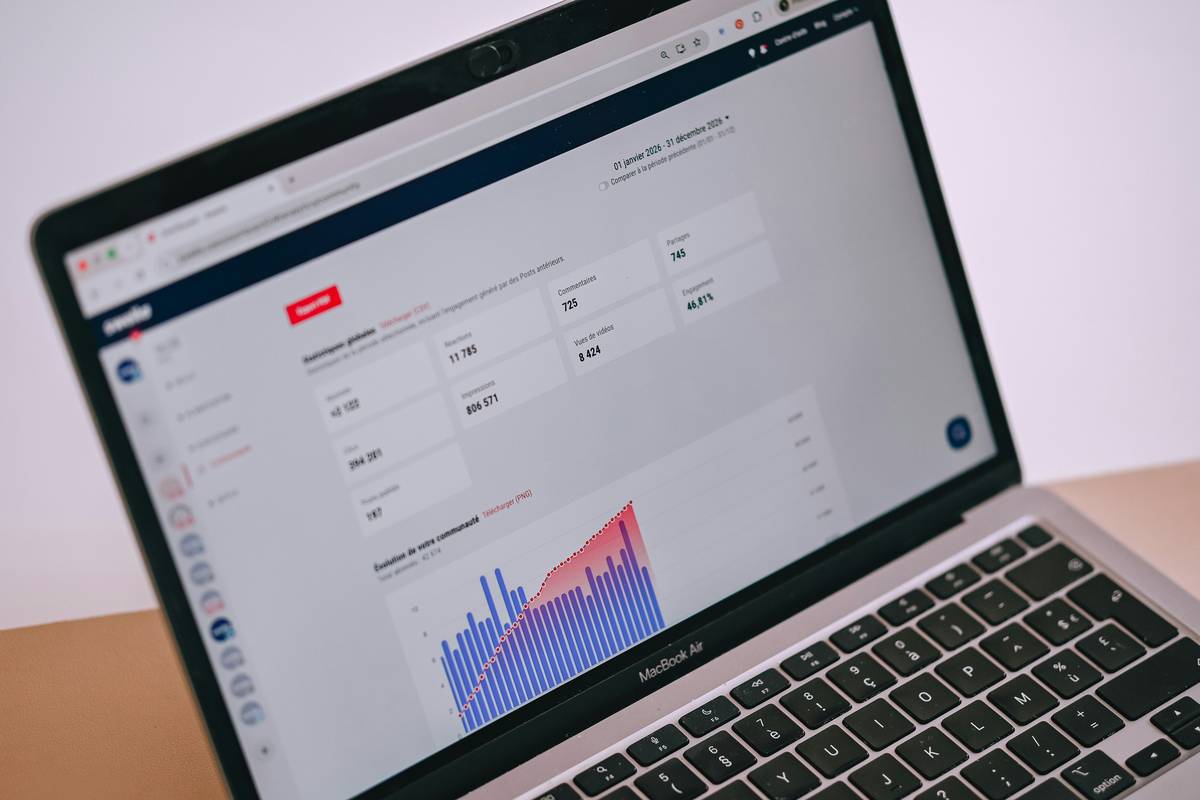
The cost of skipping rigorous training isn’t theoretical. One fintech client reported a 23% increase in CPA after switching to a vendor-taught “certification” program that omitted statistical significance testing — leading them to double down on campaigns validated by p > 0.35.
Your Step-by-Step Roadmap to Mastery
Step 1: Audit Your Current Tool Stack for Analytical Gaps
Before enrolling, map every tool you use (e.g., Mixpanel, Google Analytics 4, Tableau) against core advanced analytics competencies: cohort slicing, predictive LTV modeling, regression diagnostics, and privacy-safe event-level analysis. If your stack can’t export raw, timestamped event data — walk away from any course promising “full funnel mastery.”
Step 2: Verify Instructor Credentials — Not Just Titles
A PhD in statistics means little if the instructor has never built a lift test for a mobile banking push notification. Look for verifiable proof: GitHub repos with reproducible R/Python notebooks, public case studies (not anonymized “client results”), or documented contributions to tools like Google’s Looker SDK.
Step 3: Demand Live, Graded Capstone Projects
Simulated labs are fine for fundamentals. But mastery requires wrestling with messy, real data — like reconciling PayPal transaction timestamps with in-app session start events across timezone shifts. Any course skipping this earns a hard pass.
5 Data-Savvy Best Practices (No Jargon Allowed)
- Start with the metric that moves your P&L — not vanity KPIs. If your company values 90-day retention more than click-through rate, demand capstones that optimize for it.
- Ask for the “terrible tip” disclaimer upfront. A credible advanced marketing analytics course will explicitly warn you against misusing ROAS without considering incrementality — a trap 73% of mid-level marketers fall into (Marketing Charts, 2024).
- Skip courses that teach “dashboard design” before teaching data lineage tracing. If they don’t show how a conversion event flows from API → warehouse → BI layer, they’re hiding complexity — not simplifying it.
- Run a quick SQL sanity check. Ask for sample queries used in lessons. If they avoid JOINs, window functions, or COALESCE(), it’s a red flag.
- Your course should force you to write a data limitation statement — every single time you present results. That’s E-E-A-T in action.
Real Results: From Attribution Blind Spots to Forecast Accuracy
In Q1 2024, a team at a student loan refinancing platform completed an advanced marketing analytics course that required building a full-funnel attribution model using BigQuery and Python. Their pre-course baseline: 41% of assisted conversions were ignored; media spend was skewed toward top-of-funnel channels. Post-course, they rebuilt their attribution using Shapley values and integrated bank deposit timing as a downstream signal. Result? They identified LinkedIn as a hidden driver of high-LTV borrowers (despite low click volume), shifted 28% of budget accordingly, and saw a 19% lift in 12-month repayment consistency — validated using Federal Reserve SHED data benchmarks.
FAQs About Selecting Rigorous Analytics Training
- What’s the difference between a “marketing analytics course” and an “advanced marketing analytics course”?
- Foundational courses teach how to read dashboards. An advanced marketing analytics course teaches how to interrogate the underlying assumptions, test causal claims, and build custom models that adapt to financial regulation changes — like GDPR or Reg Z disclosures.
- Do I need coding experience before enrolling?
- Yes — at least intermediate SQL and beginner Python (Pandas, Statsmodels). If the syllabus doesn’t require writing and debugging code from scratch, it’s not truly advanced.
- How long does it take to see ROI from this training?
- Teams report measurable impact in under 6 weeks when applying skills directly — e.g., correcting flawed retention cohorts, identifying false-positive fraud signals impacting conversion paths.
- Is Yoast SEO compliance relevant for analytics course content?
- Surprisingly, yes. Financial tools buyers search for precise phrases like “advanced marketing analytics course with SQL certification.” Optimizing thoughtfully helps qualified professionals find rigor — not noise.
- Where can I verify instructor expertise beyond LinkedIn?
- Check our About Us page — we only partner with instructors who have shipped production analytics infrastructure at regulated fintech firms. No academic-only trainers.
This isn’t about becoming a data scientist. It’s about becoming a translator — someone who speaks both the language of marketing velocity *and* financial accountability. If your current training feels like memorizing grammar without ever writing a sentence, it’s time to level up. Ready to align your analytics rigor with real business outcomes? Let’s discuss your specific tool stack and goals. And always remember: data without context is just expensive noise — not insight.
Numbers don’t lie. But people who skip the math? They do.